
I’m excited to welcome Card79 as the fifth quarterly sponsor of Weekly Robotics! If you care about how humans perceive your designs, you should definitely check out their portfolio.
With that sponsorship, all the sponsor slots are filled for the next couple of weeks, a situation I didn’t imagine when I set off on the redesign work. I want to take this opportunity to thank past and current sponsors for making this newsletter possible, and, of course, you, dear reader, for being with us. Thank you!





Great robots deserve great first impressions. We design the human moments that shape adoption [Sponsored]
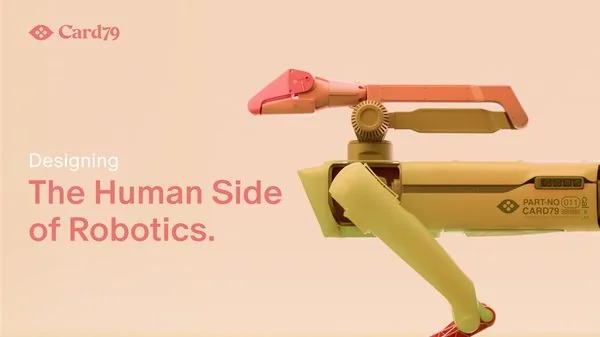
Card79 helps robotics companies accelerate adoption and deployment by shaping every human touchpoint—from physical form and interfaces to human-robot interaction.
That means interfaces that reduce operator cognitive load, products that earn attention in demos and investor meetings, and robot behaviors that are legible, predictable, and safe.
Introducing the mimic hand M1

Last week, we took a look at 1X NEO’s hands, and shortly after, mimic announced their M1 hand. The hand seems quite capable of human-like precision and motions, has very sensitive joint current sensing and a touch sensor embedded within a glove, and apparently can take a beating with a hammer. A humanoid arm’s race is officially on (sorry, couldn’t resist the pun).
aerial-autonomy-stack

Quoting the repository:
An open framework to simulate and deploy perception-based PX4/ArduPilot drone swarms with ROS2, YOLO, LiDAR, NVIDIA Jetson
To learn more about this work, check out the quickstart video in the repo or read this paper. Big thanks to Jacopo, who is our reader, for submitting this work!
HelpMate Showed Us the Future — Then Got Stuck in the Hallway
If you’ve been reading this newsletter for a while, you know I’m a sucker for a good lessons-learned-from-the-field story. This is one of those, where Bernie R. recalls how HelpMate, a delivery robot built for hospital deliveries in 1988, wasn’t necessarily a well-thought-out product and had a range of issues. According to Bernie, some of these lessons carry over into today’s approaches that utilize AI.
ManufacturedMotion/Hex

Hex is a six-legged, open-source hexapod built by a trio of engineers from Binghamton University. The documentation is quite sparse, but you will find BOM and CAD for each of the three platform iterations in this GitHub repository. Nice work!
Leet Robotics — Learn Robotics and ROS 2 in the Browser

Leet Robotics is a platform for learning ROS 2 in the browser. The course content is freely available to follow without an account, but you can pay for an integrated environment to run the code more easily.
How I Built the Most Efficient Drone Ever Made - YouTube

Luke Maximo Bell is back with a new version of his very efficient multirotor design. This time, Luke was able to fly the drone for 4 hours and 21 minutes. As always, this is a proper in-depth engineering video.
Puffin-Inspired Robot that Swims and Flies

Researchers from MIT and EPFL designed a robot that can swim and fly. Making a winged robot surface from the water and transition to flight is no small feat, as you will learn from this video. Using a superhydrophobic coating on the wings was probably a great enabler for making this whole thing work.
Walden Robotics launches at $1.1B valuation for general-purpose robots

Walden Robotics today emerged from stealth with $300 million in funding. The company said it is building and deploying robots that continuously learn and improve while performing real work.
Our Sponsors
- Card79 helps robotics companies accelerate deployment and adoption by designing every human touchpoint between people and autonomous systems—from industrial design and interfaces to human-robot interaction.
- Foxglove is a purpose-built, modular platform for robotics teams to collect, organize, and learn from vast quantities of multimodal data, creating the data flywheel to safely scale from development to distributed fleets
- Jiga connects hardware teams directly with vetted manufacturers for reliable capacity from prototype to production, combining the speed of digital manufacturing with the trust of a long-term supplier relationship
- Point One Navigation delivers centimeter-accurate positioning to robots and autonomous systems — powered by the world’s densest fully-owned RTK corrections network.
- Viam is the software platform for building, deploying, and managing robotics applications. Write control logic in your language of choice with well-defined APIs for hardware and services, deploy with built-in OTA updates, and easily scale from prototype to production.
Events
- Actuate 26: Aug 18 - Aug 19, 2026. San Francisco, California, United States of America
- Commercial UAV Expo: Sep 01 - Sep 03, 2026. Las Vegas, Nevada, United States of America
- Autonomy: Sep 14, 2026. Malmö, Sweden
- Open Source Summit: Oct 07 - Oct 09, 2026. Prague, Czechia
- ROSCon UK 2026: Oct 21 - Oct 23, 2026. Edinburgh, United Kingdom
- ROSCon Spain 2026: Oct 27 - Oct 28, 2026. Valencia, Spain
- ROSCon BE 2026: Nov 25 - Nov 26, 2026. Nivelles, Belgium
- Humanoids 2026: Dec 06 - Dec 09, 2026. Santa Clara, California, United States of America
For more robotic events, check out our event page.
Want to promote your product or service in Weekly Robotics? Check out our advertising options.