
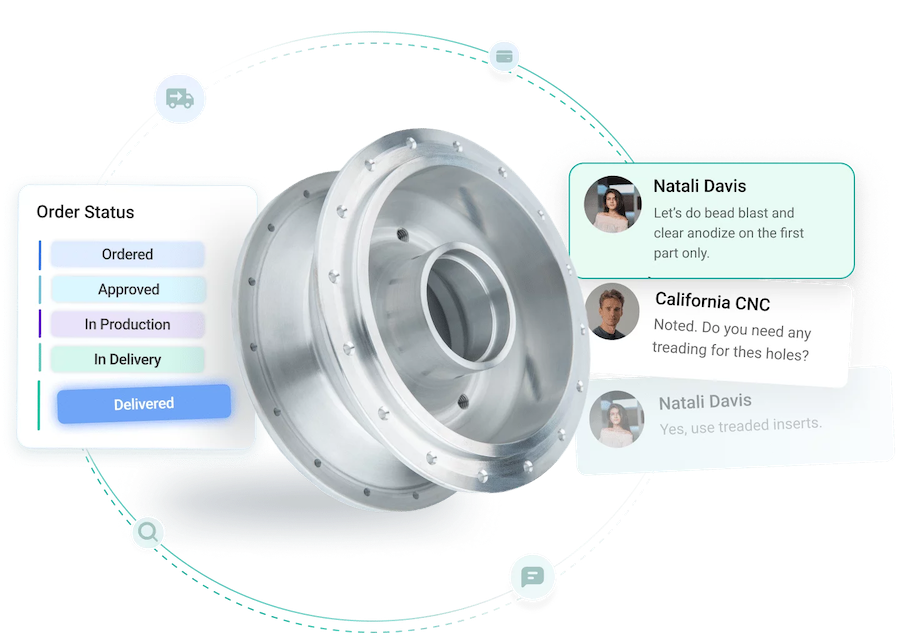
More than software and controls
I recently sat down with Adar Hay, CEO of Jiga, to talk about a part of robotics that does not get nearly enough attention: manufacturing and supply chain. We spend a lot of time talking about perception, controls, autonomy, and AI, but turning a working prototype into a reliable physical product is a completely different challenge. In our conversation, Adar shared what he has learned from working with engineering teams and manufacturers, and why, for many robotics companies, the real bottleneck is not building the robot itself, but building the systems around it that make scaling possible.
Robotics teams usually spend a lot of time thinking about design, testing, controls, and iteration speed. But once a project starts moving beyond one-off prototypes, another constraint shows up fast: sourcing custom mechanical parts without burying engineers in procurement work.
That was one of the more interesting takeaways from my interview with Adar. His view is that many robotics startups stay engineering-heavy for a long time, which makes sense in the early days. But it also means engineers often end up carrying a surprising amount of sourcing and supplier-management overhead.
Orders, chat, and CAD in one place
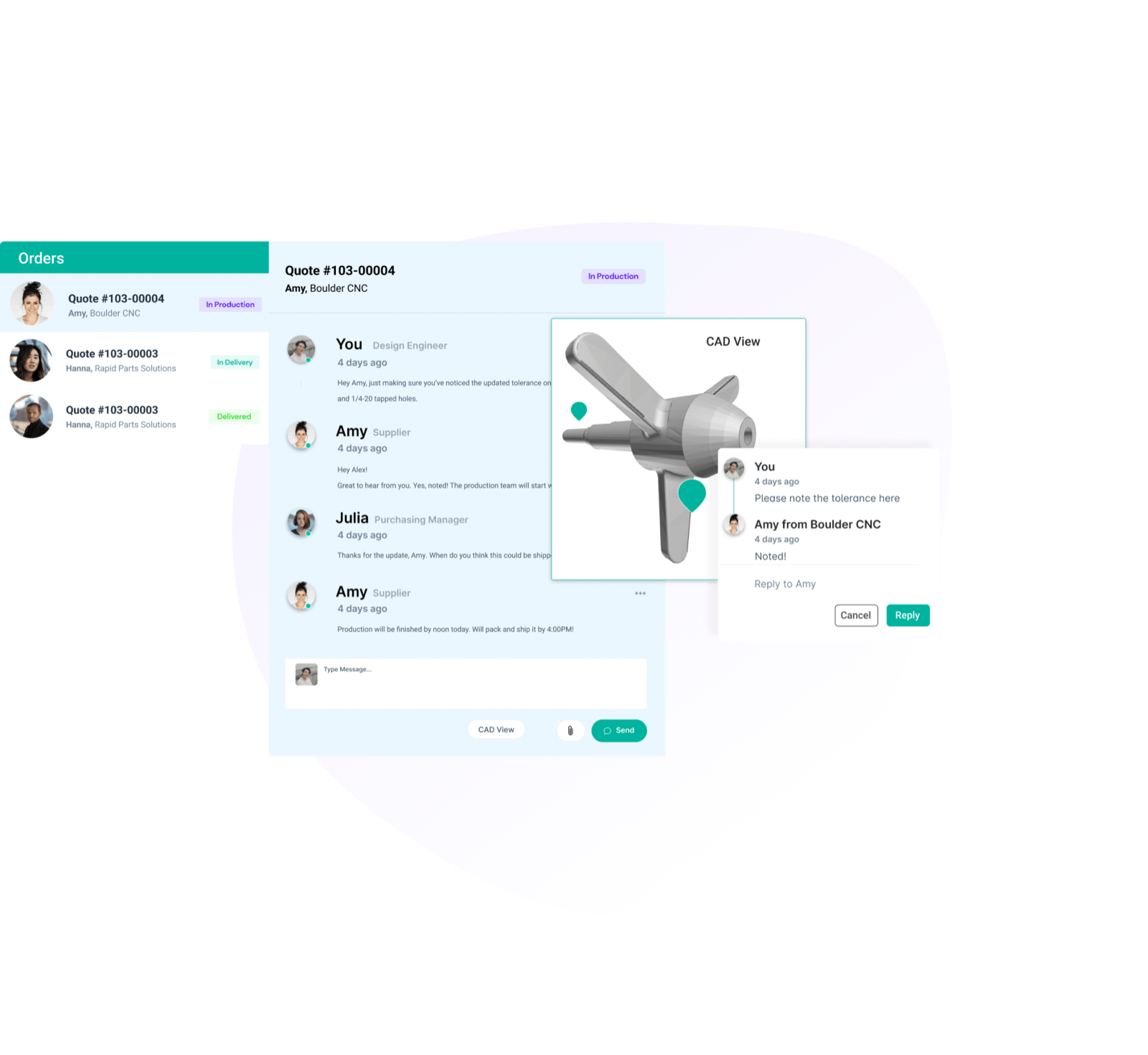
That becomes a real issue in robotics, where teams often rely on tight-tolerance, custom parts, and frequent design changes. The jump from prototype to production is about building consistency: the right supplier relationships, the right communication loops, and the right manufacturing feedback presented early enough that problems do not show up late.
Suppliers as partners, not printers
One thing I liked in Adar’s framing is that he does not treat manufacturing as a transactional step. The best suppliers are not just shops that take a drawing and ship a part. They can influence design decisions, flag manufacturability issues, and help teams avoid painful delays before they happen.
There is also an AI angle here, but not in the usual “replace people” sense. In physical product development, software can accelerate quoting, routing, documentation, and issue detection, but the human layer still matters a lot. Especially in areas where the cost of miscommunication compounds quickly.
The bigger lesson is simple: if you are building robots, supply chain maturity is not something to bolt on later. The teams that scale more smoothly are usually the ones that start building those manufacturing relationships while they are still in the prototype phase.
Interview
Mat Sadowski: What surprised you most about robotics teams and their needs today?
Adar Hay: What surprised me was how much procurement overhead and supply chain overhead there is on the engineering teams, specifically in robotics. That happens a lot because in robotics, you have a lot of tight-tolerance parts, parts that need to be custom-made, and just a lot of procurement overhead there.
Mat: What do robotics teams often miss when moving from prototype to production?
Adar: There’s this gap from prototyping to production. You suddenly start speaking more about cost reduction, production requirements, quality, and risk. When you’re prototyping, you just need the parts fast. But you want to get those parts fast while also building consistency, even in R&D — establishing a communication cadence with suppliers who actually know your specific requirements.
Mat: What makes a manufacturer truly valuable to an engineering team?
Adar: How much value there is in the communication side surprised me. Knowledgeable, communicative suppliers can add a lot of value to a company. They can influence how a product is designed and change its trajectory. They’re not only taking a drawing and making it — they can be a very valuable resource.
Mat: How do you think about AI in manufacturing workflows?
Adar: It’s not about human or AI. It’s how humans and AI work together. The question is not only how we can automate something, but how we can make tasks 10 times more valuable.